Keeping the exterior of a commercial property clean isn't just about appearances. In Greater Manchester's damp climate, algae, moss, and ingrained dirt build up quickly on almost every surface — concrete, block paving, render, tarmac, cladding — and left untreated they become slip hazards, accelerate surface deterioration, and reflect poorly on whoever is responsible for the site. Commercial exterior cleaning in Oldham and across the wider region is a practical maintenance task, not a cosmetic luxury, and the businesses and property managers who treat it that way tend to spend less over time.
The demand for reliable commercial exterior cleaning in Oldham has grown steadily as more landlords, letting agents, and facilities managers realise that reactive cleaning — calling someone in only when a surface looks bad — costs more than scheduled maintenance. This guide covers what commercial cleaning actually involves, who typically needs it, how the work gets done, and what to look for in a contractor. If you're managing communal spaces, a block of flats, a retail unit, or an HMO portfolio, most of what follows will be directly relevant to your situation.
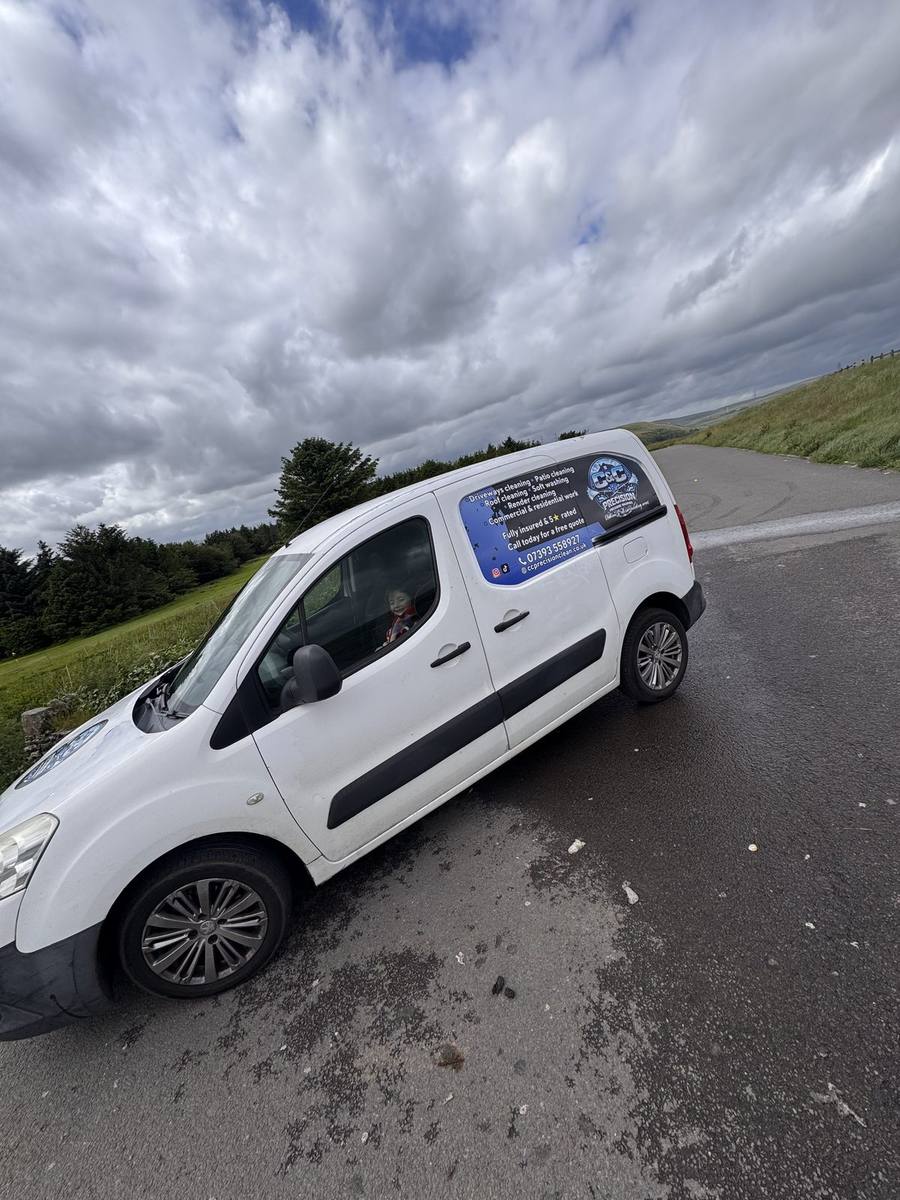
C&C Precision operating across Greater Manchester — fully insured commercial exterior cleaning.
Quick answer: Commercial exterior cleaning in Oldham covers pressure washing car parks, retail units, warehouse exteriors, and managed properties for landlords, letting agents, and housing associations. C&C Precision uses professional-grade equipment and softwashing to remove algae, grime, and staining — restoring kerb appeal and meeting compliance standards across Greater Manchester.
What Does Commercial Exterior Cleaning Actually Cover?
The term covers a wide range of surfaces and property types, and scope varies considerably from site to site. At the most basic level, commercial exterior cleaning includes any professional cleaning of external surfaces on a property used for business, let, or managed communal purposes. That takes in concrete and block paving car parks, rendered and clad building frontages, external walkways and stairwells, bin store areas, retail unit forecourts, and the communal paths and drives on managed residential blocks. Some jobs are straightforward single-surface cleans; others involve coordinating several different methods across multiple surfaces in a single visit.
It's worth being clear that this isn't a one-size-fits-all service. A retail park forecourt with heavily oil-stained concrete requires different equipment and chemistry than a rendered apartment block with green algae growth, which in turn is nothing like a block paving car park that needs cleaning, re-sanding, and possibly a surface treatment to slow future contamination. The right contractor will assess the specific surfaces, the level of soiling, and any access considerations before recommending a method — not apply the same approach to everything. You can get a sense of the range of surfaces and methods involved by browsing the full services page.
One thing that often surprises clients is how much the condition of surrounding areas affects the brief. Bin stores, for example, tend to be neglected until the smell and staining spread outward. External stairwells on residential blocks accumulate moss and biological growth that becomes a genuine safety liability. Getting the full picture of a site matters before any pricing or scheduling conversation begins.
Who We Work With in Oldham and Greater Manchester
Letting agents managing end-of-tenancy turnarounds are among the most regular users of commercial exterior cleaning services. When a property needs to be re-let quickly, the exterior is often the last thing addressed and the first thing a prospective tenant notices. Algae-stained render, weed-filled block paving, and a grimy driveway will undermine even a well-presented interior. Agents managing terraced houses and flats across Oldham, Rochdale, Tameside, and surrounding areas typically need flexible scheduling and fast turnaround — something a photo-based quoting process supports well.
Landlords with HMO or terraced portfolios face a slightly different set of problems. Communal external areas — paths, rear yards, bin areas — often fall between tenancies without anyone taking ownership of their upkeep. Moss and algae on shared paths are a particular issue given how wet and overcast the North West tends to be for much of the year. Oil staining on concrete driveways and yards is also common, especially on older properties. Housing associations managing larger blocks have compliance obligations on top of the practical maintenance concerns: communal areas need to be kept safe, and slip-hazard paths or deteriorating render can become a liability.
Retail and industrial park managers tend to need periodic cleans of large-surface-area concrete or tarmac forecourts, often with oil and tyre-mark contamination, as well as cleaning of unit fascias and frontages. The challenge here is usually scale and scheduling — work needs to happen outside trading hours or on days when footfall is low, and the areas involved can be substantial. Commercial pressure washing at this scale requires the right equipment and the capacity to complete the work efficiently without extended disruption.
Pressure Washing vs Softwashing for Commercial Surfaces
Choosing the right cleaning method for a given surface isn't a minor technical detail — it's the difference between a clean, undamaged surface and one that's been stripped, cracked, or had water forced into the substrate. High-pressure rotary cleaning is the right tool for hard, dense surfaces that can tolerate it: concrete, block paving, tarmac, and natural stone flags where the stone is sound. On these surfaces, the mechanical action of the pressure removes ingrained dirt, oil, and biological growth effectively. Driveway cleaning and block paving cleaning typically fall into this category, though even here pressure settings and nozzle selection matter.
Rendered surfaces, cladding, painted brickwork, and any surface with a coating or finish that can be damaged by direct pressure require softwashing instead. Softwashing uses a low-pressure application of sodium hypochlorite solution — the concentration and dwell time adjusted for the specific surface and level of biological contamination — to kill and break down algae, moss, lichen, and other organic growth. The result is a clean surface without any mechanical stress on the substrate. Softwashing is the standard method for render, and using high pressure on K-Rend or silicone render in particular is a straightforward way to cause damage that costs significantly more to repair than the clean would have.
A competent contractor will assess surface type first and choose accordingly. If you're speaking to anyone who proposes a single approach for every surface on a mixed commercial site without first looking at what's there, that's worth questioning. The same applies to the question of whether a sealer or biocide treatment is appropriate after cleaning — on some surfaces it makes practical sense to slow re-contamination; on others it adds cost without proportionate benefit.
Common Commercial Jobs We Handle Across the Region
Block paving car parks are among the most frequent commercial jobs. The challenge isn't just surface soiling — it's that block paving requires the jointing sand to be in reasonable condition to stay stable, and pressure washing inevitably displaces some of it. A clean-only job on block paving runs from around £3.50/m², a clean with chemical treatment (typically a biocide to address algae and weed inhibition) from £4.25/m², and a full restoration with re-sanding from £5.50/m². Re-sanding alone, where the surface has already been cleaned, is around £2.00/m². For commercial car parks, the full restoration option often makes most sense where the paving has been neglected for several years and jointing sand has been significantly depleted. More on that process in our block paving re-sanding guide.
Rendered apartment block frontages are a regular part of commercial work across Greater Manchester. The typical picture is a block that looked fine when built but has developed significant green and black biological staining within a few years — which is normal in this climate and nothing to do with the quality of the render. Softwashing with an appropriate sodium hypochlorite mix, left to dwell properly before rinsing, removes the contamination without stressing the surface. Neighbouring stonework or brickwork on the same elevation can usually be addressed in the same visit. Render cleaning requires patience more than brute force — the chemistry does the work if given the right conditions.
Retail unit forecourts and communal bin store areas are jobs where the soiling is often more concentrated and more varied. Oil, food waste residue, and heavy biological growth all need different treatment. External stairwells on residential blocks accumulate moss on horizontal surfaces and algae on vertical ones, and can become genuinely hazardous in wet weather. These are situations where the condition of the surface has a direct safety implication, and where getting the clean done properly — including treating for re-growth — matters more than doing it cheaply.
What to Expect on the Day: Process and Disruption
Most commercial jobs begin with either a site visit or a photo quote via WhatsApp, depending on the size and complexity of the site. For straightforward jobs — a driveway or forecourt with clear dimensions and no unusual access issues — photos and measurements are usually enough to put together an accurate price. For larger or more complex sites, a visit makes sense. Either way, the goal is to arrive on the day knowing exactly what needs to happen, with the right equipment and materials loaded.
On the day itself, the sequence is broadly the same across most jobs: pre-treat where applicable (biocide or softwash solution applied and left to dwell), clean, treat if a post-clean application has been agreed, and then leave the site clear with no waste or runoff issues outstanding. Dwell time for softwash treatments can range from fifteen minutes to an hour or more depending on the surface and the level of contamination — this isn't something to rush, because cutting dwell time short reduces effectiveness significantly. For block paving jobs with re-sanding, the kiln-dried sand goes down after the surface has had time to dry and before any sealer is applied.
Scheduling commercial cleans around business hours or tenant movements takes a little coordination, but it's worth doing properly. Early morning starts, weekend slots, or phased cleaning of a car park to keep part of it accessible are all practical options — they just need to be agreed in advance rather than assumed on the day.
Noise and water runoff are the two concerns that come up most often. Pressure washing is loud, particularly rotary surface cleaning, and that needs to be factored into scheduling on occupied sites. Water runoff from softwash treatments is managed through dilution rates and application method — responsible discharge is standard practice, not an optional extra. If a site has specific drainage restrictions or sensitive areas nearby, that's relevant information to share at the quoting stage so it can be built into the plan.
When You Should Call in a Professional Rather Than DIY or In-House
There are situations where attempting to manage exterior cleaning with domestic equipment or in-house maintenance staff is a reasonable choice, and situations where it isn't. The dividing line is usually a combination of surface type, scale, and liability. For a small rear yard or a single domestic-scale driveway, a competent person with a decent consumer pressure washer can do a reasonable job. For a rendered building frontage, a block paving car park, or any surface on communal or commercial land where an insurance claim could follow a slip or surface damage, the calculation changes.
Render is the clearest example. Consumer-grade pressure washers used at full pressure on modern render systems can force water into the substrate, crack or delaminate the surface, and void any existing warranty on the render itself. The cost of repairing pressure-damaged render is substantially higher than the cost of a professional softwash clean. The same principle applies to any coated or finished surface — the wrong method causes damage that the right method would have avoided entirely. If you're unsure whether your surface can handle pressure washing, the guide on whether pressure washing can damage your paving and the piece on softwashing vs pressure washing for render are both worth reading before making a decision.
For housing associations and commercial leaseholders, there may be compliance obligations that make professional documentation of the cleaning work relevant — not just getting it done, but being able to show it was done properly and by an insured contractor. In those cases, calling in a professional isn't about upselling; it's about making sure the work counts for the purposes it needs to count for. C&C Precision carries £1,000,000 public liability insurance and can provide documentation if a facilities manager or site coordinator requires it.
Getting a Quote for Commercial Exterior Cleaning in Oldham
The quickest way to get an accurate price is to send photos over WhatsApp along with an approximate surface area if you have it. For commercial exterior cleaning in Oldham and across Greater Manchester, the factors that affect pricing most are surface area, surface type, current level of soiling, and access. A large concrete car park with moderate soiling is priced differently from the same area of block paving with heavy contamination and depleted jointing sand. Photos make this assessment straightforward in most cases — you don't need to measure precisely, just give a reasonable indication.
What affects a commercial quote specifically, beyond the surface itself, is whether the work needs to be scheduled outside normal hours, whether there are multiple surface types on the same site, and whether ongoing maintenance visits rather than a one-off clean would be more practical. For letting agents and landlords managing multiple properties, it's worth discussing whether a regular schedule makes sense — the reviews page reflects the experience of clients who've used both one-off and repeat services.
Be cautious of any quote that arrives without the contractor having seen the surface — either in person or via photos — or that doesn't distinguish between surface types and methods. Commercial exterior cleaning in Oldham covers a wide range of situations, and a credible quote reflects that specificity. The goal of a good quote isn't to get the work at any price; it's to set accurate expectations about what will be achieved, what it will cost, and how the work will be carried out.
Frequently asked questions
Do you offer commercial exterior cleaning contracts in Oldham?
Yes. For letting agents, landlords, and housing associations managing multiple properties, we can arrange regular scheduled cleans rather than one-off visits. Get in touch to discuss frequency and pricing based on your portfolio — it's easier to plan maintenance than to fix years of neglect.
Is your public liability insurance sufficient for commercial sites?
C&C Precision carries £1,000,000 public liability insurance, which covers commercial work including managed residential blocks, retail forecourts, and housing association properties. We can provide documentation if your site manager or facilities team requires it before we start.
Can you clean render on apartment blocks or commercial buildings without causing damage?
Yes — rendered surfaces need softwashing with sodium hypochlorite rather than high-pressure washing, which can force water into the substrate or damage the finish. We assess the render type first (K-Rend, pebbledash, silicone render, etc.) and apply the correct method and dwell time to clean it safely and thoroughly.
How do you handle water runoff and drainage on commercial sites?
Runoff is something we think about on every commercial job, particularly where softwash chemicals are used. We work within safe dilution rates, avoid applying near drains where required, and follow best practice for responsible discharge. If your site has specific drainage conditions, let us know upfront and we'll factor it into the plan.
Need a price for a commercial property in Oldham?
Send a few photos of the site over WhatsApp and we'll come back to you with a straightforward quote — usually the same day.