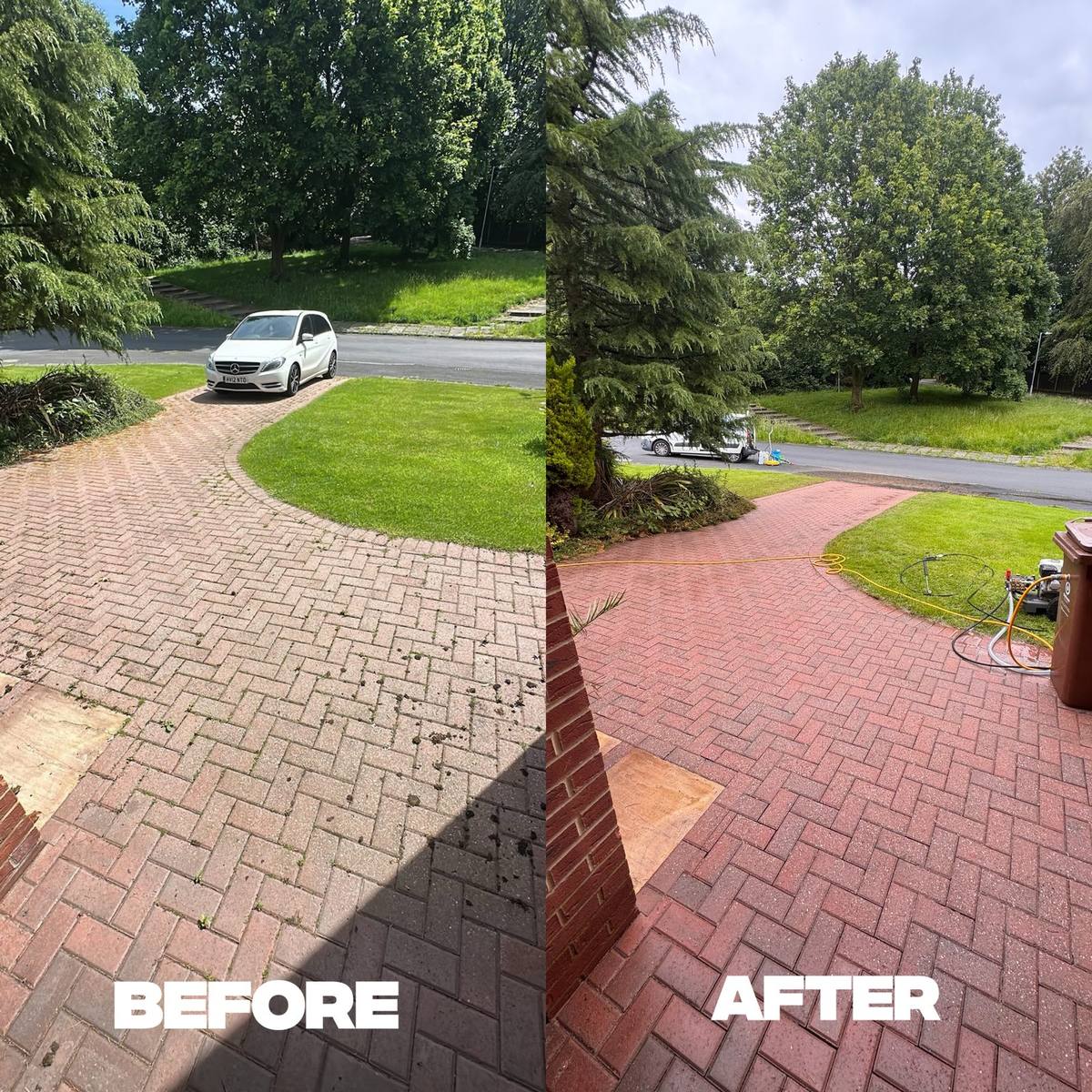
Cleaned & Re-Sanded
Joints refilled to lock blocks together.
Block paving re-sanding across Oldham and Greater Manchester — fresh kiln-dried sand brushed deep into the joints after cleaning to stabilise the paving and slow down weed and moss regrowth.
Re-sanding is the finishing step that makes a block paving clean actually last. The fine kiln-dried sand that sits between the blocks gradually washes away over the years — and is largely removed during a proper clean — leaving open joints where weeds seed and blocks can shift.
We brush fresh kiln-dried sand into the joints once the paving is clean and dry, working it right down so the blocks are locked together again. It firms the whole surface up, reduces movement, and makes it much harder for weeds and moss to re-establish.
It's usually done as the final stage of a block paving clean, but we can re-sand existing clean paving too.
— Callum Wainwright, owner, C&C Precision Pressure Washing
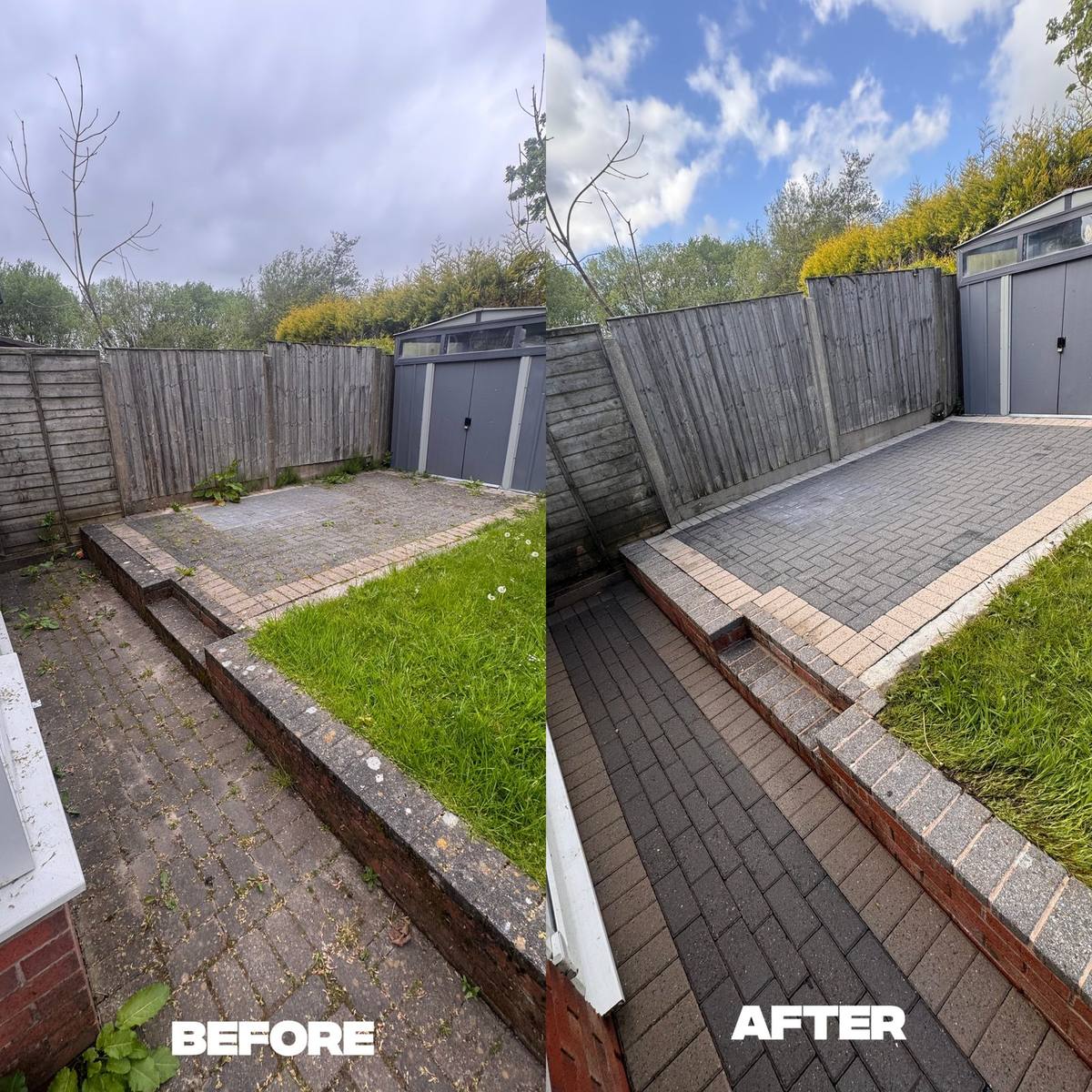
Genuine recent before & after photos — our own work.
Based in Oldham, covering all of Greater Manchester. You deal with the people doing the work.
£1,000,000 public liability on every domestic and commercial job, with proof on request.
We match the method to the surface — pressure or soft washing — so you get a proper finish safely.
Consistently 5-star reviewed on Google and Facebook by local customers.
Send a few photos on WhatsApp and get a clear price — no waiting around for a visit.
We rinse down and clear up, leaving everything clean and tidy when we're done.
Based in Oldham and covering the wider Greater Manchester area. If your town isn't listed, just ask — we travel.
It's the step that protects your investment. Open joints let weeds seed and blocks move; refilling them with kiln-dried sand stabilises the paving and keeps it looking clean for longer.
Yes — if your paving is already clean we can re-sand on its own. If there's growth or dirt in the joints, a clean first gives a much better, longer-lasting result.
We're based in Oldham and cover all of Greater Manchester — including Manchester, Rochdale, Royton, Shaw, Chadderton, Saddleworth, Failsworth, Middleton, Salford, Bury, Bolton, Stockport and Ashton-under-Lyne. If you've found this page, there's a good chance we cover you.
Yes — free, no-obligation quotes. The fastest way is to send 2–4 clear photos and your postcode on WhatsApp and we'll send a price back. For larger jobs we can arrange a quick visit.
Yes. Photos plus a rough size and your postcode are usually enough for an accurate quote. For bigger or more complex jobs we may suggest a free visit first.
Yes — we hold £1,000,000 public liability insurance for all domestic and commercial work, and we're happy to show proof on request.
Not always. As long as we have access to the area and an outdoor tap, we can carry out most work even if you're out. We'll confirm access details when booking.
We usually just need an outdoor tap. We'll let you know during quoting if anything else is needed for your specific job.
Message us on WhatsApp, call 07393 558927, or send photos for a quote. Once you're happy with the price we'll agree a convenient date.
Send a few photos on WhatsApp with your postcode and we'll send a clear price — no pushy sales, no hassle.