Hiring someone to pressure wash your driveway, patio or render might feel like a straightforward decision, but the question of insurance is one that most homeowners skip over entirely — and it can be an expensive oversight. Fully insured pressure washing isn't just a box on a checklist; it's the thing that determines who carries the financial risk if something goes wrong on your property. Given the scale of equipment involved, the chemicals used in softwashing, and the variety of surfaces that can be damaged by the wrong approach, that risk is more real than people tend to assume.
This guide is aimed at anyone in Greater Manchester — whether you're in Oldham, Rochdale, Bury, Stockport or anywhere in between — who is trying to make a sensible decision about which contractor to hire. It covers what insurance actually means in practice, what can happen without it, and the questions worth asking before you let anyone near your property with a pressure washer.
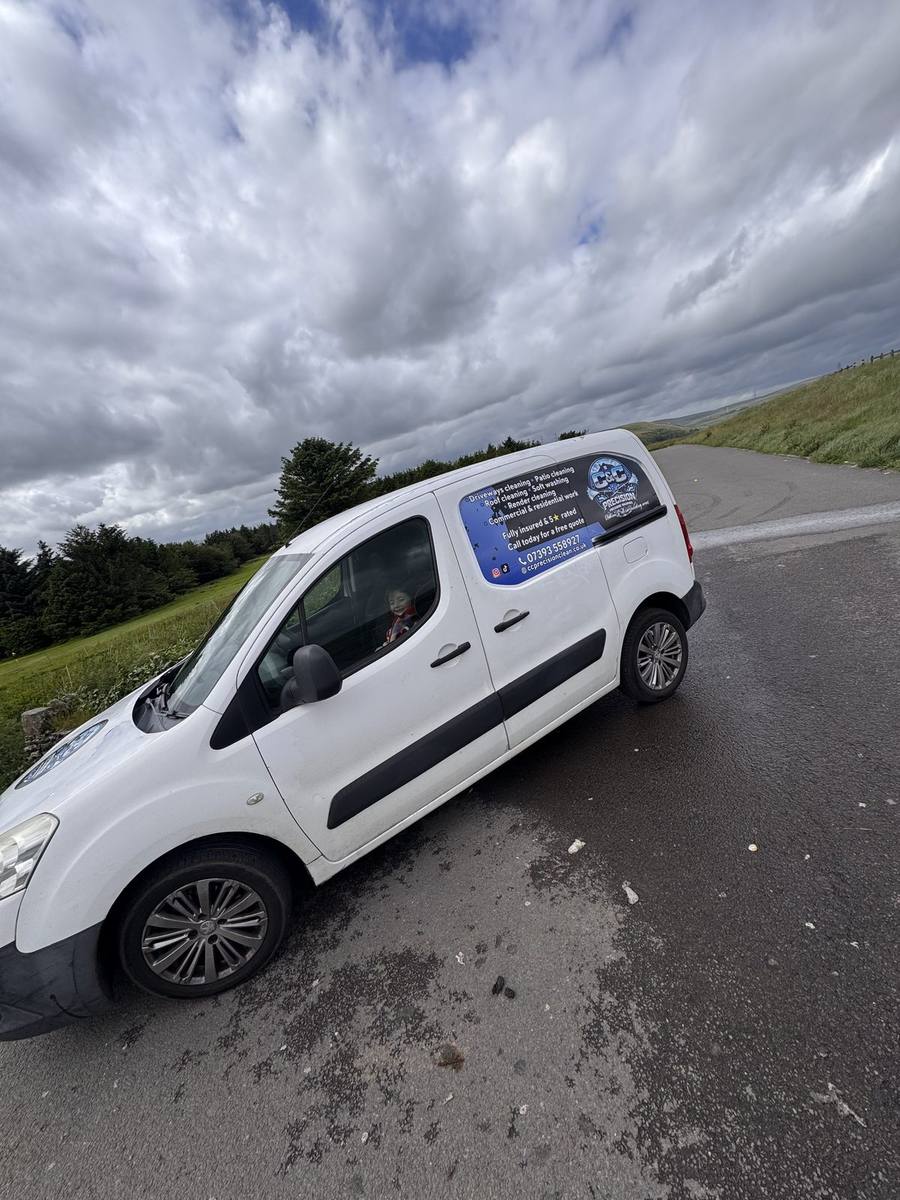
C&C Precision — fully insured, based in Oldham, covering Greater Manchester.
Quick answer: A fully insured pressure washing service protects you as the homeowner if accidental damage occurs during the job — to your property, a neighbour's boundary, or a third party. Without £1m public liability cover, you could be left footing the bill. Always ask to see proof of insurance before any contractor starts work.
What 'Fully Insured' Actually Means for a Pressure Washing Company
Public liability insurance exists to cover the cost of damage or injury caused to a third party as a result of a contractor's work. In practical terms, that means damage to your property, to a neighbouring property, or to a member of the public who might be affected by the work being carried out. If a pressure washer operator floods your neighbour's basement through a shared drain, or a chemical treatment drifts and strips the paint on a parked car, public liability insurance is what pays for it.
£1,000,000 is widely regarded as the standard minimum level of cover for professional trades, and most reputable exterior cleaning contractors carry at least this. Some commercial contracts — housing associations, local authority work, retail parks — require higher limits before a contractor is even allowed on site. For residential jobs, £1m covers the vast majority of realistic scenarios, but the key word is "carries." The policy needs to be current, the work type needs to be explicitly covered, and the contractor needs to actually have it — not just claim to.
It is also worth noting that public liability insurance is distinct from employers' liability insurance, which covers employees, and from any personal accident cover the tradesperson might hold. When you're asking about insurance, you're specifically asking about public liability — the cover that protects you, your property, and anyone else who might be affected by the work.
What Can Go Wrong Without Insurance
Pressure washing looks straightforward from the outside, but the margin for error is real. Render is one of the most common examples: too much pressure on a surface like K-Rend or traditional sand and cement render can cause delamination — the coating pulls away from the wall beneath. A contractor who doesn't know the correct technique, or who uses a general-purpose lance on a delicate finish, can cause thousands of pounds worth of damage in under an hour. You can read more about the specific risks involved in our guide to render cleaning.
Window seals are another casualty. High-pressure water directed at the wrong angle around double-glazed units can break the seal between panes, leading to condensation and, eventually, the need for replacement. On block paving, a contractor who uses too much pressure and fails to re-sand properly afterwards leaves the blocks loose and liable to shift — a trip hazard and a structural problem rolled into one. The North West's wet climate accelerates all of this; freeze-thaw cycles in winter will exploit any joint or seal that has been compromised.
Softwashing introduces a different category of risk. Sodium hypochlorite solutions, used properly, are effective and safe — but if the operator doesn't protect surrounding plants, garden furniture, or a neighbour's fence before applying, the chemical can bleach or kill whatever it contacts. A drift of overspray on a dry, windy day in Saddleworth or on an exposed Rochdale terrace is enough to cause a dispute with a neighbour. Without insurance, none of these scenarios have a clean resolution.
Why Cheap, Uninsured Operators Are a False Economy
An uninsured sole trader might quote you £80 to clean a driveway where a fully insured professional quotes £150. On the face of it, the cheaper quote looks appealing. But what that lower price actually represents is a transfer of risk — from the contractor to you. If something goes wrong, there is no policy to claim against, and pursuing an individual through the courts is slow, expensive, and often fruitless if they have no assets to recover.
The damage from a pressure washing job gone wrong is rarely trivial. Render repairs can run into several thousand pounds. Replacing a cracked or delaminated conservatory roof panel, damaged from water forced under the wrong angle, is not cheap. Even a relatively minor issue — a cracked patio flag, a blocked drain from displaced jointing sand — costs money to put right. The saving on the original quote disappears quickly, and the stress of trying to recover costs from someone operating without a paper trail is considerable.
There is also a correlation between insurance status and general professionalism. A contractor who has taken the time to get properly insured has usually also invested in the right equipment, learned how different surfaces behave, and priced their work to reflect what the job actually involves. The two tend to go together. You can see what a proper job looks like in our before and after driveway cleaning results — the difference between a careful, methodical clean and a rushed one is visible.
Questions to Ask Before You Hire Anyone
Before any contractor starts work on your property, these are the things worth confirming. A professional will not be offended by the questions — they will have answered them before.
- Ask for the name of their insurer and the policy number. A legitimate policy has both.
- Check the expiry date. Insurance lapses happen, and an expired policy offers no protection.
- Confirm that the specific type of work is covered. Some policies exclude certain activities — chemical applications, roof work, or commercial sites may require separate or enhanced cover.
- Ask whether they carry employers' liability if they bring anyone else along. If they're working alone, this may not apply, but it's worth knowing.
- Remember that a van, a uniform, a business Facebook page, or a WhatsApp presence proves nothing about insurance status. Ask directly.
If a contractor is reluctant to share their insurer's name or policy number before work starts, treat that reluctance as your answer. Transparency about cover is a basic professional standard, not an unusual request.
How Insurance Affects the Way We Work
Carrying insurance changes how you approach a job, because it makes the consequences of cutting corners concrete. Before starting any exterior clean, a proper risk assessment matters — what surface are we dealing with, what condition is it in, what pressure is appropriate, and what needs protecting first? That process isn't bureaucracy; it's what separates a job done well from one that causes a problem the contractor then has to own.
On a softwash job, for example, fully insured pressure washing contractors will cover or wet down nearby plants before applying any sodium hypochlorite solution, check wind direction, and avoid working in conditions where drift is likely. On block paving, the approach to jointing sand matters — if kiln-dried sand is displaced during cleaning, it needs replacing with the right grade of sand and compacted properly, not just swept over loosely. Our page on block paving re-sanding explains why this step is part of the job, not an optional add-on.
Equipment selection is another area where professionalism shows. Roof tiles, older stonework, and painted or coated render all require lower-pressure techniques or chemical cleaning rather than direct pressure washing. A contractor who uses the same lance setting for a concrete driveway and a lime-rendered wall doesn't understand the materials — and no amount of goodwill covers the repair bill if that approach goes wrong.
When Should You Call in a Professional?
DIY pressure washers have their place — a light clean of garden furniture or a plastic-coated fence is manageable with a domestic machine. But there are surfaces and situations where hiring an unlicensed operator, or attempting the job yourself without the right equipment, carries a genuine risk of expensive damage. Render is the most obvious example: a domestic pressure washer at the wrong setting on K-Rend is enough to cause delamination. The guide to pressure washing vs soft washing is worth reading if you're unsure which method suits your surface.
Roof moss removal is another area where professional involvement is strongly advisable. Working at height, on wet or mossy tiles, with equipment that can affect the tile fixings if misused — this is not a task for an unlicensed operator or a confident amateur. Our roof cleaning and moss removal service is specifically set up for this, with appropriate methods that don't disturb the roof structure. Block paving with deteriorating jointing sand is also worth considering carefully: high-pressure cleaning on paving with poor jointing will displace what's left and leave you with a worse situation than before.
Any work involving height — cleaning above single-storey level, clearing gutters, or washing conservatory roofs — adds another layer of risk that requires proper insurance cover and, in some cases, specific equipment like a water-fed pole system rather than working off a ladder.
What to Take Away From All This
The practical advice here is simple: verify insurance before any work starts, ask for the insurer's name and policy number, and treat public liability cover as a baseline rather than a premium feature. A contractor who can't or won't confirm their cover is one you should walk away from, regardless of how competitive their quote is.
For the record, C&C Precision Precision Pressure Washing carries £1,000,000 public liability insurance covering all pressure washing, softwashing, block paving, render, roof, and stone cleaning work across Greater Manchester. Those details are available on request before any job begins. If you'd like to see what our work looks like, the reviews page gives an honest picture of how jobs have gone for customers across the region. Quotes are straightforward — send photos over WhatsApp and you'll get a clear price back, usually the same day.
Pricing for reference: block paving cleaning typically starts from £3.50/m² for a standard clean, £4.25/m² for a clean with chemical biocide treatment, and £5.50/m² for a full restoration including re-sanding. Re-sanding only, where cleaning has already been done, is around £2.00/m². These figures vary depending on access, condition, and size, but they give a reasonable sense of what a properly done job costs when it's done by someone who carries the right cover.
Frequently asked questions
What level of public liability insurance should a pressure washing company have?
£1,000,000 public liability is considered the standard minimum for professional exterior cleaning contractors. Some commercial jobs — such as housing association work or retail parks — require even higher limits. Always ask for the policy details, not just a verbal confirmation.
Does my home insurance cover damage caused by an uninsured contractor?
In most cases, your home insurance will not automatically cover damage caused by a third-party contractor working on your property. You would typically need to pursue the contractor directly — which is extremely difficult if they carry no insurance and operate informally. This is why verifying cover before any work starts is so important.
Is pressure washing render or roof tiles risky enough to need insurance?
Yes — render, K-Rend, and roof surfaces are among the highest-risk areas in exterior cleaning. Using the wrong pressure on render can cause delamination; incorrect technique on roof tiles can break fixings or void manufacturer warranties. A professional using softwashing with appropriate insurance is the only safe approach for these surfaces.
Does C&C Precision carry public liability insurance?
Yes — C&C Precision holds £1,000,000 public liability insurance covering all pressure washing, softwashing, and exterior cleaning work carried out in Greater Manchester. We're happy to share the policy details before any job begins — just ask.
Want proof of insurance before you book?
Send a photo of what needs cleaning on WhatsApp and we'll come back with a fast, no-fuss quote — insurance details included.