If you manage commercial property — a retail park, a housing association estate, a block of flats with shared hard standings, or a service yard — you already know that keeping exterior surfaces clean is part of maintaining the asset and staying on the right side of health and safety obligations. What's less obvious is how many things can go wrong when a commercial clean is approached without a proper plan. A commercial pressure washing checklist isn't a bureaucratic exercise. It's what separates a job that looks right and stays right from one that causes surface damage, drain blockages, or a complaint from the site contact two weeks later.
This guide works through every stage of a commercial exterior clean in a logical order, from the first look at a site through to sign-off. It applies to letting agents, landlords, housing associations, facilities managers and anyone responsible for maintaining shared or commercial hard surfaces across Greater Manchester and the wider North West. At the end there's a practical checklist you can print and use. The checklist format is straightforward because the job, done properly, should be.
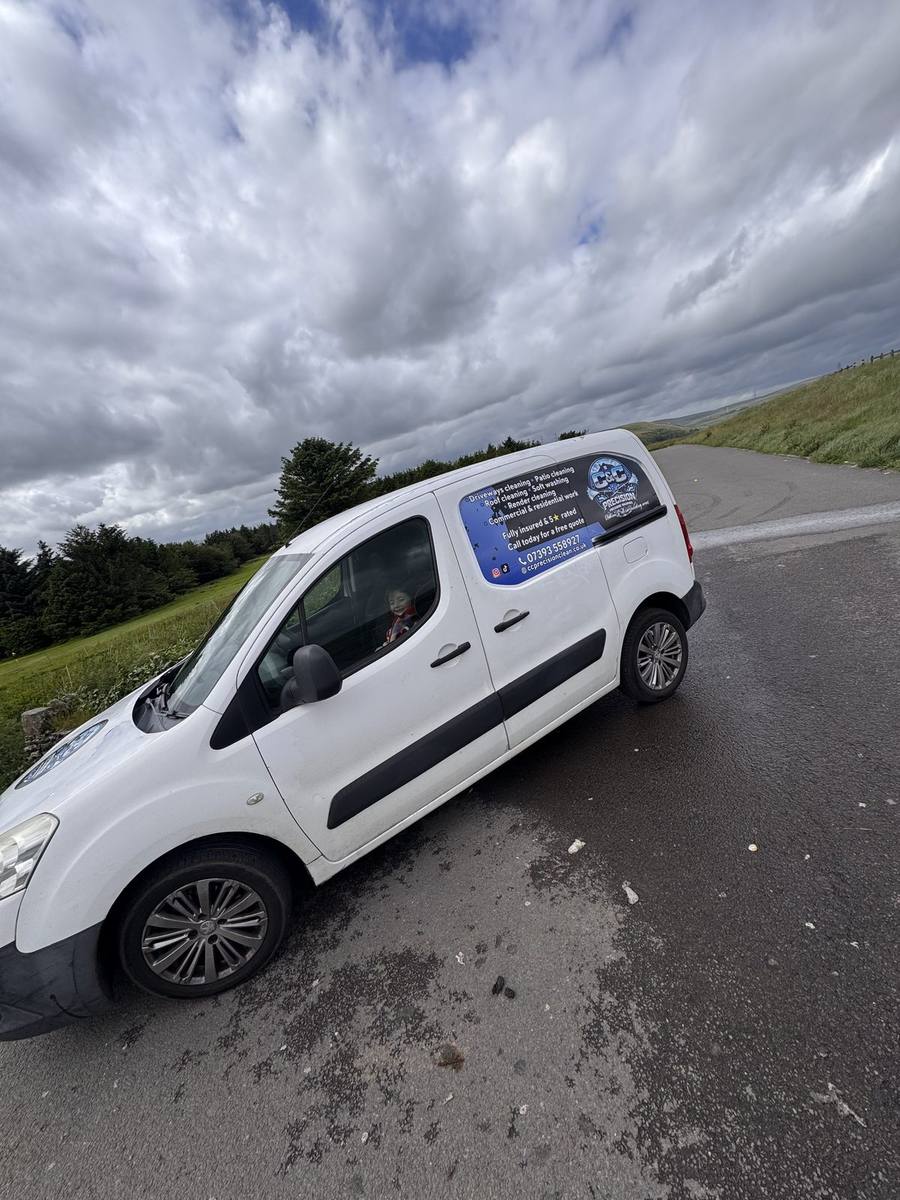
C&C Precision operate across Greater Manchester — Oldham, Rochdale, Bolton, Bury, Stockport and beyond.
Quick answer: A commercial pressure washing checklist covers surface assessment, equipment and chemical selection, safety setup, pre-clean preparation, the wash itself, post-clean inspection, and waste water management. Working through each stage in order protects the surface, keeps operatives safe, and delivers a consistent, professional result every time.
Why Commercial Jobs Need a Proper Checklist
Residential and commercial pressure washing look similar from the outside. There's a machine, a hose, water and sometimes chemicals. But the stakes on a commercial site are different in almost every respect. A domestic customer might accept a slightly uneven result on their driveway and ask you to come back. A housing association contract manager or a retail park facilities team won't, and the reputational and financial consequences of a job gone wrong — damaged block paving, a blocked surface water drain, a slip hazard left behind — are considerably higher.
A commercial pressure washing checklist exists for two reasons: quality and accountability. Quality because it forces every stage of the process to be completed in the right order. Accountability because it creates a record — for the contractor, for the client, and for insurers if anything is later disputed. On a site with multiple stakeholders, shared surfaces and passing members of the public, having a documented process isn't optional.
In the North West, where damp weather means organic growth on hard surfaces is almost continuous through autumn and winter, commercial sites that aren't cleaned regularly can deteriorate quickly. Moss and algae on block paving or concrete aren't just unsightly — they create genuine slip risks that fall under a property manager's duty of care. A checklist approach ensures nothing is missed and that every visit is consistent.
Stage 1 — Site Assessment and Surface Identification
Before any water or chemical touches a surface, the operative needs a clear picture of what they're working on. Surface identification matters because the wrong pressure or the wrong chemical on the wrong material causes permanent damage. Block paving, tarmac, brushed concrete, riven natural stone, painted render and exposed aggregate all behave differently under pressure and respond differently to chemical treatments. Getting this wrong on a residential job is unfortunate. Getting it wrong across a commercial car park or a housing estate's communal areas is expensive.
The site walk should check for pre-existing damage — cracked flags, loose mortar, lifting block paving edges, crumbling render — because pressure washing over damaged surfaces can turn a cosmetic issue into a structural one. It should also identify drainage routes. Knowing where the surface water goes matters both for managing runoff during the clean and for complying with any obligations around chemical discharge. Where softwashing chemicals are used, the operative needs to know whether they're rinsing toward a surface water drain or a foul drain, and whether any additional containment is needed.
Adjacent features need noting too: planting beds close to surfaces being chemically treated, parked vehicles that need moving, signage or external lighting at low level that could be damaged by high-pressure water, and any areas of the site that are in use throughout the day and need to be scheduled around. A retail park or busy car park may need the work phased across early mornings or out-of-hours visits.
Stage 2 — Equipment, Pressure Settings and Chemical Selection
One of the most common mistakes on commercial sites — particularly when in-house maintenance teams attempt large cleans — is using the same pressure and nozzle configuration across every surface. High-pressure with a narrow-angle lance that's fine for a concrete service yard will damage the surface of clay block paving, lift kiln-dried jointing sand, or strip the face from poorly applied render. A rotary surface cleaner head is generally the right tool for large flat areas — it cleans evenly, avoids the tiger-striping you get from a lance swept in arcs, and is significantly faster across open spaces like commercial car parks and retail paving.
Chemical selection follows surface identification. For hard mineral surfaces with heavy organic loading — moss, algae, lichen — a biocide pre-treatment applied with adequate dwell time will do more of the work than pressure alone, and allows lower working pressure which reduces the risk of surface damage. For rendered elevations or heavily moss-laden roofs, softwashing with sodium hypochlorite is often the correct call rather than high-pressure at all. Sodium hypochlorite kills organic growth at the root. High-pressure washing on render or roof surfaces without chemical treatment tends to blast off the visible growth while leaving spores behind, meaning regrowth appears faster.
Dilution rates for sodium hypochlorite vary by surface and contamination level, and getting them wrong risks bleaching or surface damage. This is one of the areas where professional handling is most clearly justified, particularly on commercial contracts where the surfaces involved are extensive and often expensive to repair or replace.
Stage 3 — Pre-Clean Safety and Site Setup
Once the assessment is complete and the right equipment and chemicals are selected, there's a set of practical steps that should happen before the machine is switched on. On a commercial site, skipping any of these creates either a safety problem or a liability problem — sometimes both.
Pedestrian areas adjacent to the work zone need to be clearly cordoned off. Wet hard surfaces are slippery, and high-pressure spray creates a significant exclusion zone. On a retail park or housing estate where members of the public may be present throughout the day, this cordoning isn't optional. Hoses running across pedestrian routes need to be managed — either routed to avoid crossing paths, or covered with a hose bridge where crossing is unavoidable. Drain protection should be in place before any chemical application, particularly where surface water drains are present and the chemical in use requires containment.
Water supply needs confirming before work starts, not after. On large commercial sites with significant linear meterage of paving, running out of water mid-job or finding inadequate flow at the tap is a time and cost problem. And public liability insurance should be verified and documented before any operative begins work. This matters particularly on housing association and local authority contracts where proof of cover is often a contractual requirement. If you're reading this as a facilities manager or letting agent, this is one of the non-negotiables when appointing any contractor — more on that in the section on choosing a commercial pressure washing contractor.
Stage 4 — The Cleaning Process Itself (In the Right Order)
Sequence matters during the clean itself. The basic rule on any building or structure is to work top-down — clean gutters, fascias or rendered elevations before ground-level paving, so that anything washed off above doesn't dirty a surface you've already cleaned below. On a purely flat commercial site this doesn't always apply, but where there are walls, pillars, bin store structures or rendered boundaries adjacent to the paving, deal with vertical surfaces first.
Pre-treatment chemicals need their dwell time before rinsing. Applying a biocide or sodium hypochlorite solution and immediately rinsing it off is a waste of product and time. Dwell time — typically ten to twenty minutes depending on the product, the surface and the contamination level — allows the chemistry to break down the organic growth before the rinse or the pressure washing begins. Rushing this step means more passes with the pressure washer and a poorer result. The surface cleaner should be kept moving at a consistent pace across the surface — stopping, speeding up unevenly, or overlapping inconsistently all produce visible cleaning lines that stand out once the surface dries.
As you go, loosened debris — displaced moss, weed fragments, silted material from joints — should be cleared rather than allowed to migrate toward drains. On block paving, cleaning will inevitably displace some jointing sand from between the blocks, especially where the sand is weathered or where the blocks have settled unevenly. If kiln-dried sand has been significantly displaced, block paving re-sanding should be factored in as a post-clean stage — leaving joints open invites weed growth, block movement and edge instability.
Kiln-dried jointing sand should only be applied to a fully dry surface. On a North West commercial site, this often means scheduling re-sanding for a separate visit on a dry day rather than attempting it on the same day as the clean. Sand applied to a damp surface won't bed in correctly and will partially wash out with the next rainfall.
Stage 5 — Post-Clean Inspection and Sign-Off
A post-clean walk of the entire area should happen before any equipment is loaded and before the site contact is called over. This isn't about being meticulous for its own sake — it's about catching missed patches, uneven cleaning lines, or areas where a single pass wasn't sufficient, while everything is still set up and a second pass is still practical. Checking in good light is important. Many surface cleaning issues are only visible once the surface starts to dry, which is why the post-clean walk should happen after enough drying time to reveal any inconsistencies.
Block paving joints should be inspected for sand loss. Drains should be checked clear. Any chemical residue should be confirmed fully rinsed — particularly important where sodium hypochlorite has been used near soft landscaping or where a client has concerns about surface discolouration. Photographing the finished result is standard practice on every commercial job. Before-and-after photographs serve the client's records, support any contract documentation, and provide a baseline for the next scheduled visit. It's also straightforward evidence if any dispute later arises about the condition of the surface before or after the clean.
Sign-off from the site contact should be obtained in person where possible — a walk-round with the facilities manager or letting agent representative who can confirm they're satisfied. On remote-managed sites where no one is on-site during the work, a photographic report sent immediately after completion is the practical equivalent. Either way, the job isn't finished until there's a documented confirmation that it's been completed to standard.
When to Call In a Professional Rather Than Handle It In-House
In-house maintenance teams can handle a lot of routine exterior upkeep, but there are commercial scenarios where attempting a pressure wash without specialist equipment, chemicals and insurance is a genuine risk. Large open areas — retail car parks with several hundred square metres of paving — take professional-grade surface cleaning equipment to do efficiently and evenly. A domestic-spec pressure washer and a lance will take three times as long and produce an inconsistent result. More significantly, surfaces like painted render, natural stone cladding or clay roofing require chemical knowledge and pressure control that goes beyond general maintenance capability.
The insurance point is worth spelling out clearly. If an operative without public liability cover damages a tenant's vehicle, floods a ground-floor unit through a blocked drain, or causes a slip injury during a clean, the financial exposure falls on whoever commissioned the work. For a landlord, letting agent or housing association, appointing an uninsured contractor on a commercial site isn't a cost-saving — it's an unquantified liability. Anyone commissioning exterior cleaning on a commercial site should verify the contractor holds adequate public liability cover before work begins. You can read more about why this matters in our guide to why fully insured pressure washing matters.
C&C Precision carry £1,000,000 public liability insurance and work with landlords, letting agents, housing associations and retail parks across Greater Manchester — Oldham, Rochdale, Bury, Bolton, Manchester, Tameside and Stockport. When you're looking for a commercial pressure washing contractor in the region, the right questions are: can they show proof of insurance, can they demonstrate knowledge of the surfaces you have on-site, and can they provide a documented process from assessment through to sign-off. If the answer to any of those is uncertain, look elsewhere.
Your Practical Commercial Pressure Washing Checklist — Print and Use It
The following pulls together every stage covered in this guide into a format that property managers, letting agents and landlords can work through on any commercial exterior cleaning job. It's designed to be used both when briefing a contractor and when reviewing the completed work.
- Site assessment: Surface types identified. Pre-existing damage noted. Drainage routes mapped. Adjacent features (planting, vehicles, signage) noted and protected.
- Equipment and chemical selection: Correct PSI and nozzle confirmed per surface type. Rotary surface cleaner confirmed for open flat areas. Softwashing selected where surfaces require low-pressure chemical treatment (render, roofs, algae-heavy paving).
- Pre-clean safety setup: Pedestrian exclusion zone cordoned off. Hoses routed safely or covered. Drains protected where required. Water supply confirmed. Public liability insurance verified and documented.
- Cleaning sequence: Top-down order observed. Pre-treatment applied and dwell time observed. Surface cleaner moved at consistent pace. Loosened debris cleared progressively. Block paving joints assessed for sand loss.
- Post-clean inspection: Full area walked in good light after partial drying. Missed patches or uneven lines addressed. Chemical rinse confirmed complete. Drains checked clear. Before-and-after photographs taken.
- Sign-off: Site contact walk-round completed or photographic report sent. Any follow-up work (re-sanding, sealing, retreatment) noted and scheduled.
On frequency: most commercial hard surfaces — car parks, communal block paving, service yards, retail paving — benefit from a professional clean at least once a year. In the North West, where shaded surfaces stay damp for months at a time and organic growth builds rapidly through winter, once-a-year cleaning is a minimum rather than a luxury. High-footfall sites, heavily shaded areas, or surfaces that have been left more than eighteen months between cleans will often justify a six-monthly schedule. Leaving moss and algae to establish deeply makes each subsequent job harder and accelerates surface wear — block paving in particular suffers when joints are colonised by weed roots over multiple seasons.
If you're unsure what frequency is right for your site, send photos via WhatsApp and ask for an honest assessment. That's the fastest way to get a straight answer about what's needed and what it's likely to cost — commercial block paving cleaning starts from around £3.50 per square metre for a straightforward clean, rising to approximately £4.25 per square metre where chemical pre-treatment is needed for heavy organic growth, and £5.50 per square metre for a full restoration including re-sanding. Re-sanding only on existing clean paving runs from around £2.00 per square metre. Every site is different, which is why photos before a quote always give a more accurate figure than a rate card alone. You can find out how that process works in our guide to getting a pressure washing quote on WhatsApp.
Frequently asked questions
What does a commercial pressure washing service include?
A proper commercial pressure washing service covers surface assessment, correct equipment and chemical selection, safe site setup, the clean itself, and a post-clean inspection with photographic sign-off. Depending on the surface, it may also include softwashing for organic growth, or block paving re-sanding where kiln-dried sand has been displaced during cleaning. C&C Precision handle all of this as standard on commercial jobs across Greater Manchester.
How often should commercial hard surfaces be pressure washed?
Most commercial hard surfaces — car parks, service yards, communal block paving, retail paving — benefit from a professional clean at least once a year. Shaded or damp sites, high-footfall areas, or surfaces prone to algae and moss growth will often need attention every six months. Leaving organic growth too long makes each job harder and can accelerate surface wear.
Do I need to clear the area before the pressure washing team arrives?
For most commercial jobs, yes — removing vehicles, bins, furniture and any loose items from the area means the team can work efficiently and avoids accidental damage. A good contractor will confirm exactly what prep is needed when they quote the job. C&C Precision will let you know clearly what's required when we receive your site photos on WhatsApp.
Are you insured for commercial pressure washing in Greater Manchester?
Yes. C&C Precision carry £1,000,000 public liability insurance, which covers commercial contracts including work for landlords, letting agents, housing associations and retail parks. We're happy to provide insurance documentation before any commercial job starts — just ask when you get in touch.
Need a commercial clean quoted fast?
Send a few photos of the site over WhatsApp and we'll come back with a straightforward price — no obligation, no sales call.